A single blood sugar reading only tells you about one moment. The HbA1c test shows the bigger picture — your average blood sugar over the past two to three months — which is why it is the standard test for diagnosing diabetes and tracking how well it is controlled. This guide covers the full form, normal range, what each number means, and how to bring it down.
What Is the HbA1c Test? (Full Form and Meaning)
HbA1c stands for hemoglobin A1c, and it is also called glycated or glycosylated hemoglobin, or simply A1c. Hemoglobin is the protein in red blood cells, and when sugar in your blood sticks to it the result is glycated hemoglobin. The more sugar in your blood over time, the higher the percentage of hemoglobin that is glycated.
What Does the HbA1c Test Show?
It reflects your average blood sugar over about the past 2-3 months, with the most recent 4-6 weeks counting the most. It does not show today's sugar, daily ups and downs, or low sugar episodes, which is why it is not a replacement for fasting or post-meal sugar tests.
Why Is the HbA1c Test Done?
- To screen for prediabetes and diabetes, including in adults with a family history, excess weight, or a sedentary lifestyle
- To diagnose diabetes (a result of 6.5% or above, usually confirmed on repeat)
- To check how well diabetes treatment is working
- To help decide whether medicines or lifestyle plans need changing
- As part of a routine annual health checkup
HbA1c Normal Range Chart
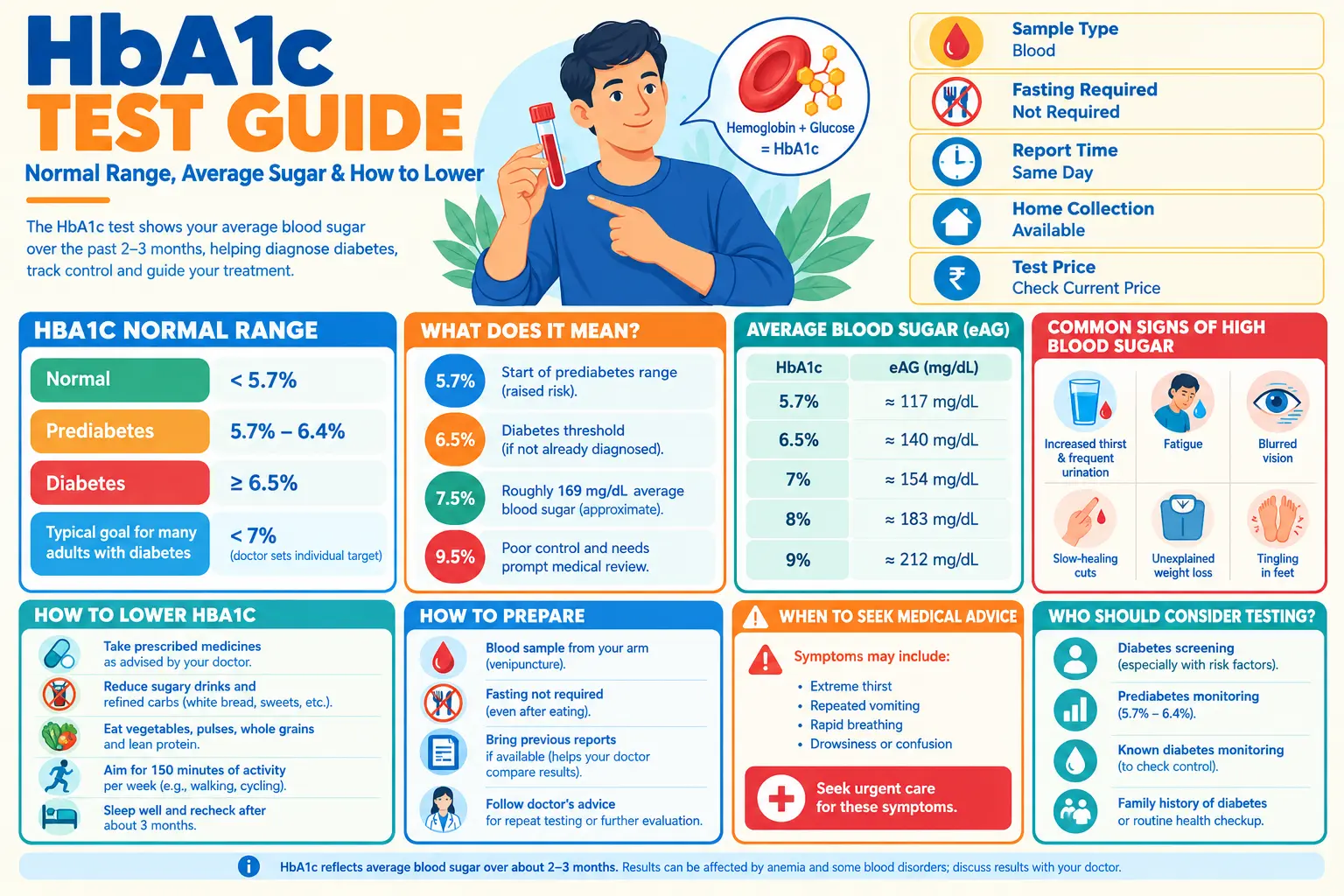
- Normal: below 5.7%
- Prediabetes: 5.7% to 6.4%
- Diabetes: 6.5% or above
- Typical goal for many adults with diabetes: below 7% (your doctor sets your own target)
These diagnostic ranges are the same for men and women. After eating or fasting does not change them either, because HbA1c is not affected by your last meal.
HbA1c Normal Range by Age
- Adults (diagnosis): the same cut-offs at every adult age — 5.7% and 6.5%
- Adults with diabetes: goal usually below 7%
- Older adults or those with other serious illnesses: a slightly looser goal, often 7.5-8%, to avoid low sugar
- Children and teens with type 1 diabetes: a target set by their pediatric diabetes team, commonly around 7% or lower
What Does HbA1c 5.7, 6.5, 7.2, 7.5, 7.6, or 9.5 Mean?
- 5.7%: the start of the prediabetes range — a warning to act on lifestyle now
- 6.5%: the diabetes threshold if you are not already diagnosed; good control if you already are
- 7.2%: slightly above the usual 7% goal, often acceptable for some people with diabetes
- 7.5% and 7.6%: in the diabetes range, with an average sugar of roughly 170-175 mg/dL
- 9.5%: poor control — average sugar above 220 mg/dL — that needs prompt medical review
HbA1c to Average Blood Sugar Conversion (eAG Chart)
Your doctor can estimate your average glucose (eAG) from HbA1c with this formula: eAG in mg/dL = 28.7 × HbA1c − 46.7. Using it:
- HbA1c 5.7% ≈ 117 mg/dL
- HbA1c 6.5% ≈ 140 mg/dL
- HbA1c 7% ≈ 154 mg/dL
- HbA1c 8% ≈ 183 mg/dL
- HbA1c 9% ≈ 212 mg/dL
- HbA1c 10% ≈ 240 mg/dL
- HbA1c 12% ≈ 298 mg/dL
What Is a Dangerously High HbA1c?
There is no single danger number. As a rough guide, above about 9% shows poor control, and 10-12% or more is associated with a high risk of eye, kidney, nerve, and heart complications. Whatever the number, extreme thirst, repeated vomiting, rapid breathing, drowsiness, or confusion need urgent medical care.
Low HbA1c: What Does It Mean?
A very low HbA1c can mean frequent low-sugar episodes from diabetes medicines, but it can also come from anemia with fast red cell turnover, recent blood loss or transfusion, pregnancy, or certain hemoglobin variants. A low value should be reviewed by a doctor rather than assumed to be good news.
Symptoms of High HbA1c, Diabetes, and Prediabetes
- Increased thirst and frequent urination
- Fatigue
- Blurred vision
- Slow-healing cuts and frequent infections
- Unexplained weight loss
- Tingling or numbness in the feet
- Dark, velvety skin patches on the neck or armpits (a sign of insulin resistance)
Prediabetes and early type 2 diabetes often cause no symptoms at all, which is exactly why screening matters.
What Causes a High HbA1c?
- Diabetes or prediabetes that is not well controlled
- A diet high in sugar, refined carbohydrates, and sugary drinks
- Low physical activity and excess weight
- Missed or inadequate diabetes medicines
- Infections, steroids, and other medicines that raise blood sugar
- Iron or vitamin B12 deficiency, which can make the test read higher than the true average
HbA1c vs Fasting, PPBS, Random Sugar, and GTT
- HbA1c: 2-3 month average, no fasting needed, but affected by anemia and hemoglobin variants
- Fasting blood sugar: your glucose after 8-12 hours without food, a single moment
- PPBS: glucose 2 hours after a meal, showing how your body handles food
- Random blood sugar: glucose at any time, useful when diabetes symptoms are present
- Glucose tolerance test: a timed test after a glucose drink, used in pregnancy and when other tests are unclear
They answer different questions, so doctors often combine HbA1c with fasting or post-meal sugar for a fuller picture.
Is Fasting Required for an HbA1c Test? Can You Drink Water?
No. You can eat and drink normally, including water, and have the test at any time of day. If it is booked together with a fasting sugar or lipid profile, you will be asked to fast for those tests, but not for the HbA1c itself.
How Often Should HbA1c Be Tested?
- Diabetes with stable control: at least twice a year
- Treatment recently changed or goals not met: every 3 months
- Prediabetes: about once a year
- Normal result with risk factors: every 1-3 years
How Accurate Is HbA1c? Why It Can Read Falsely High or Low
HbA1c is a reliable, convenient test, but anything that changes how long red cells live can skew it. Iron deficiency anemia and vitamin B12 deficiency can raise it, while recent blood loss, hemolytic anemia, and some hemoglobin variants such as thalassemia trait can lower it. Kidney disease and pregnancy also affect it. In these cases doctors rely more on fasting and post-meal sugar readings.
HbA1c in Pregnancy and Children
In pregnancy, HbA1c is less reliable because red cell turnover changes, and gestational diabetes is usually screened with a glucose challenge or tolerance test, though HbA1c may be checked early to spot pre-existing diabetes. In children, HbA1c is used mainly to monitor type 1 diabetes, with targets set by the pediatric team.
How to Lower HbA1c: What Actually Works
- Take diabetes medicines exactly as prescribed, and never stop or change them on your own
- Cut back on sugary drinks, sweets, and refined flour, and watch portion sizes of rice and roti
- Eat more vegetables, pulses, whole grains, and protein, with fiber at every meal
- Aim for about 150 minutes of brisk activity a week, plus a short walk after meals
- Lose excess weight gradually — even 5-10% helps
- Sleep well, manage stress, and avoid smoking
- Check your sugars as advised and repeat HbA1c after about 3 months
Because HbA1c reflects 2-3 months, real change shows over about three months, not days. Many people see a meaningful improvement in that time, though how much depends on where you start and your treatment.
Foods to Lower HbA1c and a Simple Diet Plan
No single food lowers HbA1c on its own, but the overall pattern does. Build a plate with half non-starchy vegetables, a quarter protein such as dal, paneer, eggs, fish, or chicken, and a quarter whole grains like millets, oats, or whole wheat roti. Choose whole fruit over juice, add nuts and seeds, and limit white rice, maida, fried snacks, and sweets. This plate method is a flexible alternative to a fixed diabetes diet chart, which your doctor or dietitian can tailor to you.
Can You Reduce HbA1c from 7.5 to 5?
Aiming for 5 is usually unrealistic and unnecessary for someone with diabetes, and pushing too low with medicines can cause dangerous low sugar. The usual goal is below 7%, or the target your doctor sets, and getting from 7.5% to about 7% is a sensible first step through diet, activity, and treatment adjustment.
Can I Test HbA1c at Home?
Home finger-prick kits exist, but they are less reliable than a lab test for diagnosis. A better option is home sample collection, where a phlebotomist collects your blood at your doorstep and the test is run at the lab, usually with the report ready the same day.
How Is the HbA1c Test Done?
A small blood sample is drawn from a vein in your arm, which takes a couple of minutes, and no preparation is needed. The report usually shows your HbA1c percentage and the estimated average glucose.
HbA1c Test Price and Report Time
Our HbA1c test is priced at 350, with same-day reports and free home sample collection available — so you don't need to visit the lab in person or wait days for results.
HbA1c Test Services & Pricing
Explore HbA1c test details, pricing, and convenient home sample collection services.
HbA1c Test in Panchkula, Chandigarh & Nearby Areas
Shyam Budget Friendly Labs provides accurate HbA1c testing with convenient home blood sample collection for patients across Panchkula, Chandigarh, Mohali, Zirakpur, Sector 21 Panchkula, Karimpur, Pinjore, and Kalka.
HbA1c Test — Areas We Serve
We provide HbA1c testing with home sample collection across the following locations.
Key Takeaways
- HbA1c shows your average blood sugar over about 2-3 months, so it needs no fasting
- Below 5.7% is normal, 5.7-6.4% is prediabetes, and 6.5% or above is the diabetes range
- The usual goal for adults with diabetes is below 7%, but your doctor sets your own target
- Iron or B12 deficiency, anemia, and hemoglobin variants can make HbA1c read falsely high or low
- Lowering HbA1c takes about 3 months of consistent diet, activity, and medicines as prescribed
References
- The A1C Test & Diabetes — NIDDK, National Institutes of Health
- Hemoglobin A1C (HbA1c) Test — MedlinePlus
- A1C Test — Mayo Clinic
Common Questions
Find answers to the most commonly asked questions about this health topic.
HbA1c stands for hemoglobin A1c, also called glycated or glycosylated hemoglobin. It shows your average blood sugar over the past 2-3 months.
Book HbA1c Test
Get an accurate HbA1c test with doorstep sample collection and same-day reports. No fasting needed.
Related Diagnostic Tests
These lab tests are closely related to this topic. Book with home sample collection for fast, accurate reports.
Related Health Packages
Based on this article, these preventive health packages may help you better understand your health.
Typhoid Test: Widal vs Typhidot, Normal Range & Price
Typhoid test explained: Widal vs Typhidot, how to read titre and IgM IgG results, symptoms, stages, diet, treatment, and price.
Vitamin B12 Test: Normal Range, Symptoms, Foods & Price
Vitamin B12 test explained: normal range in pg/mL, deficiency symptoms, causes, vegetarian sources, tablets vs injection, and price.