What Is a Kidney Function Test?
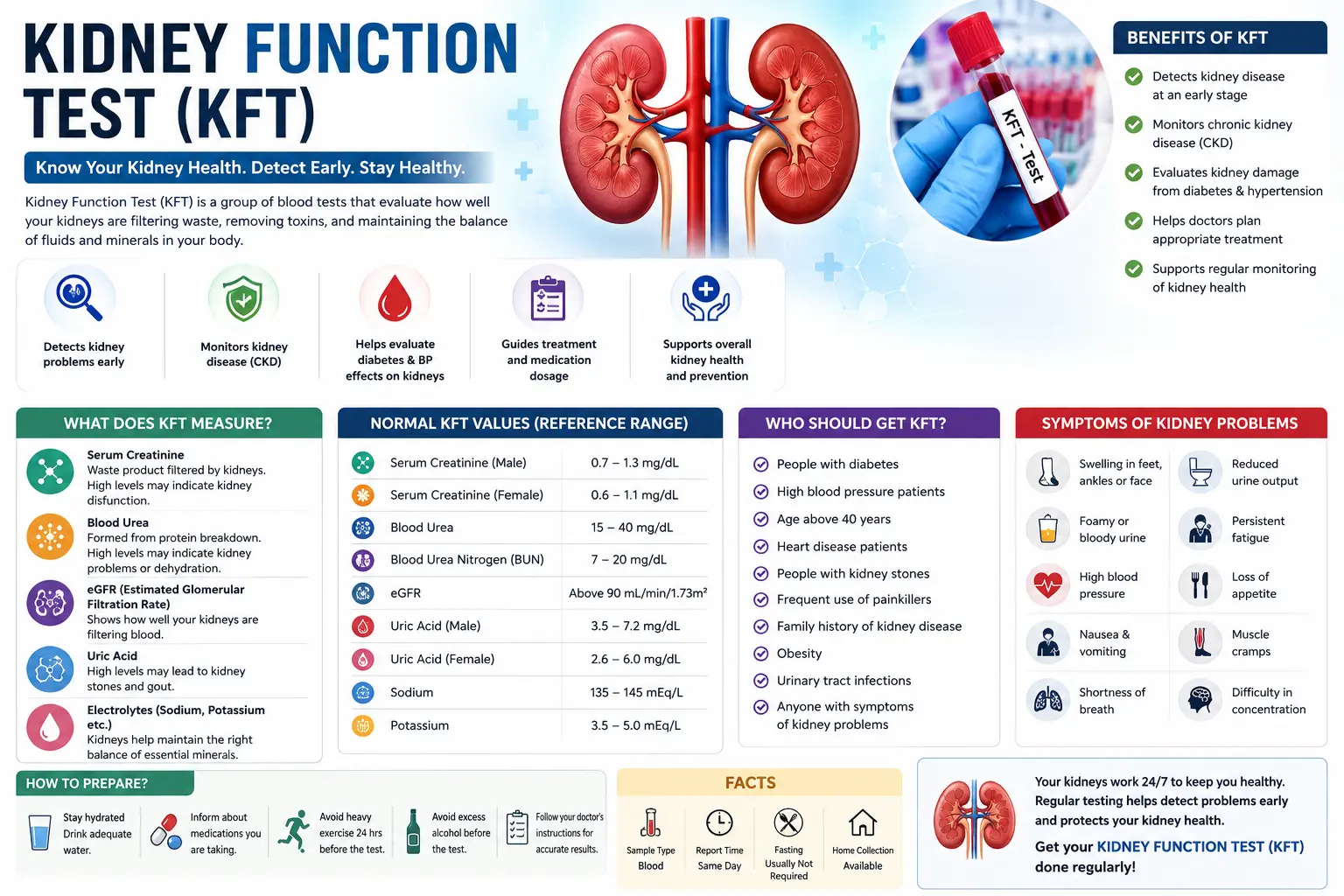
A Kidney Function Test (KFT), also known as a Renal Function Test (RFT), is a group of blood tests that evaluates how efficiently your kidneys filter waste products and maintain the body's fluid and electrolyte balance.
Healthy kidneys remove toxins, excess water, and waste materials from the bloodstream while maintaining proper levels of minerals, salts, and blood pressure.
A Kidney Function Test commonly measures Creatinine, Blood Urea, Blood Urea Nitrogen (BUN), Uric Acid, and estimates the Glomerular Filtration Rate (eGFR).
Doctors recommend this test to detect kidney disease early, monitor chronic kidney disorders, evaluate treatment response, and assess kidney damage caused by diabetes, hypertension, or certain medications.
Since kidney disease often develops silently without noticeable symptoms, regular Kidney Function Testing plays a vital role in preventive healthcare.
Why Are Kidneys Important?
The kidneys are two bean-shaped organs located on either side of the spine just below the rib cage.
Although small in size, they perform several life-sustaining functions every day.
Healthy kidneys continuously filter waste products, toxins, and excess fluid from your blood before converting them into urine.
They also regulate blood pressure, maintain electrolyte balance, produce hormones responsible for red blood cell production, activate Vitamin D for healthy bones, and help control the body's acid-base balance.
When kidney function declines, harmful waste begins to accumulate in the bloodstream, increasing the risk of serious complications such as chronic kidney disease, cardiovascular disease, anemia, electrolyte imbalance, and kidney failure.
Routine Kidney Function Testing helps identify problems before irreversible kidney damage occurs.
What Does a Kidney Function Test Measure?
A Kidney Function Test consists of several blood investigations that help doctors understand how efficiently your kidneys are working.
The most commonly measured parameters include:
- Serum Creatinine – A waste product produced by muscles. Healthy kidneys remove creatinine from the bloodstream. Elevated creatinine levels may indicate reduced kidney function.
- Blood Urea – Urea is produced when the body breaks down protein. High blood urea levels may suggest dehydration, kidney disease, or impaired kidney filtration.
- Blood Urea Nitrogen (BUN) – BUN provides additional information about kidney performance and hydration status.
- Estimated Glomerular Filtration Rate (eGFR) – eGFR estimates how well the kidneys are filtering blood. It is one of the most important indicators of kidney health.
- Uric Acid – Elevated uric acid levels may increase the risk of kidney stones, gout, and reduced kidney function.
- Electrolytes – Sodium, potassium, chloride, and bicarbonate may also be evaluated because kidney disease often affects electrolyte balance.
Doctors interpret these results together rather than relying on a single value. Your age, sex, medical history, medications, hydration status, and other laboratory findings are considered before making a diagnosis.
A Kidney Function Test provides valuable information for diagnosing kidney disease, monitoring treatment, and preventing serious complications.
Who Should Get a Kidney Function Test?
Anyone can benefit from routine kidney screening, but certain individuals have a significantly higher risk of developing kidney disease.
Doctors commonly recommend a Kidney Function Test for:
- Adults above 40 years of age
- People with diabetes
- Individuals with high blood pressure
- Patients with heart disease
- People with obesity
- Individuals with recurrent kidney stones
- Patients with urinary tract infections
- People taking long-term painkillers or certain medications
- Individuals with a family history of kidney disease
- Smokers
- Older adults
- Anyone experiencing symptoms suggestive of kidney dysfunction
People living with diabetes and hypertension are particularly vulnerable because these conditions are among the leading causes of chronic kidney disease worldwide.
Routine testing allows kidney damage to be detected early—often before noticeable symptoms develop—giving doctors the opportunity to begin treatment that may slow or prevent further kidney damage.
Even healthy individuals should consider periodic Kidney Function Testing as part of a preventive health checkup, especially if they have lifestyle or family-related risk factors.
Symptoms of Kidney Disease
Kidney disease is often called a "silent disease" because many people experience no symptoms during its early stages.
As kidney function gradually declines, waste products begin accumulating in the bloodstream, leading to various symptoms.
Common signs that may require a Kidney Function Test include:
- Swelling of the feet, ankles, or face
- Persistent fatigue
- Weakness
- Reduced urine output
- Frequent urination, especially at night
- Foamy urine
- Blood in urine
- Difficulty concentrating
- Loss of appetite
- Nausea or vomiting
- Persistent itching
- Muscle cramps
- High blood pressure
- Shortness of breath
- Puffiness around the eyes
These symptoms do not always indicate kidney disease, but they should never be ignored.
Prompt laboratory testing helps doctors identify whether the kidneys are functioning normally or whether additional investigations are required.
Early diagnosis significantly improves treatment outcomes and reduces the risk of permanent kidney damage.
Normal Kidney Function Test Values
Kidney Function Test reports contain several important measurements that help evaluate kidney health.
Although reference ranges may vary slightly between laboratories, general guidelines include:
- Serum Creatinine (Male): 0.7–1.3 mg/dL
- Serum Creatinine (Female): 0.6–1.1 mg/dL
- Blood Urea: 15–40 mg/dL
- Blood Urea Nitrogen (BUN): 7–20 mg/dL
- eGFR: Above 90 mL/min/1.73m²
- Uric Acid (Male): 3.5–7.2 mg/dL
- Uric Acid (Female): 2.6–6.0 mg/dL
Values outside these ranges do not always mean serious kidney disease.
Temporary dehydration, medications, strenuous exercise, dietary protein intake, pregnancy, age, and certain medical conditions may also influence laboratory results.
For this reason, Kidney Function Test reports should always be interpreted by a qualified healthcare professional who considers your complete medical history and clinical condition.
Understanding Creatinine, Urea & eGFR
Creatinine, Blood Urea, and eGFR are among the most important indicators used to evaluate kidney function.
Serum Creatinine rises when the kidneys become less efficient at removing waste products from the bloodstream. Persistently elevated creatinine levels may indicate kidney damage or reduced filtration.
Blood Urea reflects the body's protein metabolism. Increased urea levels may occur because of kidney disease, dehydration, gastrointestinal bleeding, or excessive protein intake. Low levels are less common but may occur in certain liver disorders or poor nutritional status.
Estimated Glomerular Filtration Rate (eGFR) is calculated using serum creatinine along with age and sex. It estimates how effectively your kidneys filter blood.
General interpretation of eGFR includes:
- Above 90 — Normal kidney function
- 60–89 — Mild reduction in kidney function
- 30–59 — Moderate kidney disease
- 15–29 — Severe kidney disease
- Below 15 — Kidney failure requiring urgent specialist care
Doctors never rely on a single laboratory value alone.
They evaluate creatinine, urea, eGFR, urine examination, blood pressure, diabetes status, imaging studies, symptoms, and previous reports together before confirming a diagnosis.
Regular monitoring of these values helps detect kidney disease early, assess treatment effectiveness, and reduce the risk of long-term complications such as chronic kidney disease or kidney failure.
Common Causes of Kidney Damage
Kidney disease can develop gradually over many years or occur suddenly because of injury, infection, or reduced blood flow.
Understanding the causes of kidney damage helps individuals take preventive measures and seek timely medical care.
Some of the most common causes include:
- Diabetes – High blood sugar can damage the tiny blood vessels responsible for filtering waste from the blood. Diabetes is the leading cause of chronic kidney disease worldwide.
- High Blood Pressure (Hypertension) – Persistently elevated blood pressure places excessive stress on kidney blood vessels, reducing their filtering ability over time.
- Kidney Stones – Recurrent kidney stones may block urine flow and increase the risk of kidney infection or long-term kidney damage if left untreated.
- Urinary Tract Infections (UTIs) – Severe or untreated urinary tract infections can spread to the kidneys, causing inflammation and permanent scarring.
- Glomerulonephritis – This condition involves inflammation of the kidney's filtering units (glomeruli) and may result from infections, autoimmune diseases, or unknown causes.
- Polycystic Kidney Disease (PKD) – An inherited disorder in which multiple fluid-filled cysts gradually replace healthy kidney tissue.
- Long-Term Use of Painkillers – Frequent use of certain pain-relieving medicines (NSAIDs) may reduce blood flow to the kidneys and contribute to chronic kidney damage.
- Dehydration – Severe or prolonged dehydration can temporarily reduce kidney function and may worsen existing kidney disease.
- Autoimmune Disorders – Diseases such as lupus may attack healthy kidney tissue, causing inflammation and impaired function.
- Heart Disease – Reduced blood circulation caused by heart disease may decrease blood supply to the kidneys, affecting their ability to filter waste.
Maintaining healthy blood sugar, controlling blood pressure, drinking adequate water, avoiding unnecessary medications, eating a balanced diet, exercising regularly, and undergoing routine health checkups can significantly reduce the risk of kidney disease.
Early Kidney Function Testing allows doctors to detect abnormalities before permanent kidney damage develops.
How To Prepare For A Kidney Function Test
Most Kidney Function Tests require very little preparation.
However, following a few simple precautions helps ensure more accurate laboratory results.
Before your Kidney Function Test:
- Drink sufficient water unless your doctor has advised fluid restriction.
- Continue taking medications only as directed by your doctor.
- Inform the laboratory if you are taking medicines that may affect kidney function, including painkillers, antibiotics, blood pressure medications, or diuretics.
- Avoid strenuous exercise for 24 hours before the test because intense physical activity may temporarily increase creatinine levels.
- Avoid excessive alcohol consumption before sample collection.
- Inform your doctor if you are pregnant or have recently undergone radiological procedures involving contrast dye.
In most cases, fasting is not required for a Kidney Function Test.
However, if your doctor has ordered additional investigations such as Blood Sugar or Lipid Profile along with Kidney Function Testing, fasting instructions may differ.
Blood sample collection usually takes only a few minutes, and most reports are available on the same day depending on the tests performed.
Following your healthcare provider's instructions helps ensure reliable and clinically useful results.
Kidney Function Testing in Panchkula
Shyam Pathology Lab provides accurate Kidney Function Testing (KFT) in Panchkula with reliable reporting and convenient home blood sample collection services.
Patients from Panchkula, Chandigarh, Mohali, Zirakpur, Sector 21 Panchkula, Karimpur, Pinjore, Kalka, and nearby areas can book Kidney Function Tests from the comfort of their homes.
Our laboratory offers comprehensive kidney health screening, including:
- Serum Creatinine
- Blood Urea
- Blood Urea Nitrogen (BUN)
- Estimated Glomerular Filtration Rate (eGFR)
- Uric Acid Testing
- Electrolyte Testing
- Home Sample Collection
- Same-Day Reporting for most investigations
Kidney diseases often progress silently without noticeable symptoms.
Regular Kidney Function Testing helps identify early abnormalities, supports timely medical intervention, and reduces the risk of chronic kidney disease and kidney failure.
Our experienced pathology team follows strict quality standards to provide accurate and dependable diagnostic reports that doctors can confidently use for treatment planning.
Common Questions
Find answers to the most commonly asked questions about this health topic.
A Kidney Function Test (KFT) is a group of blood tests that evaluate how well your kidneys remove waste products and maintain fluid and electrolyte balance.
Book Your Kidney Function Test Today
Monitor your kidney health with accurate Kidney Function Testing, home sample collection, and fast reporting from Shyam Pathology Lab.
Vitamin B12 Test: Normal Range, Symptoms, Foods & Price
Vitamin B12 test explained: normal range in pg/mL, deficiency symptoms, causes, vegetarian sources, tablets vs injection, and price.
Malaria Test Guide: Symptoms, Causes, Diagnosis, Treatment & Prevention
Learn about malaria symptoms, causes, diagnosis, blood tests, treatment, prevention, complications, and malaria testing in Panchkula.