What Is Malaria?
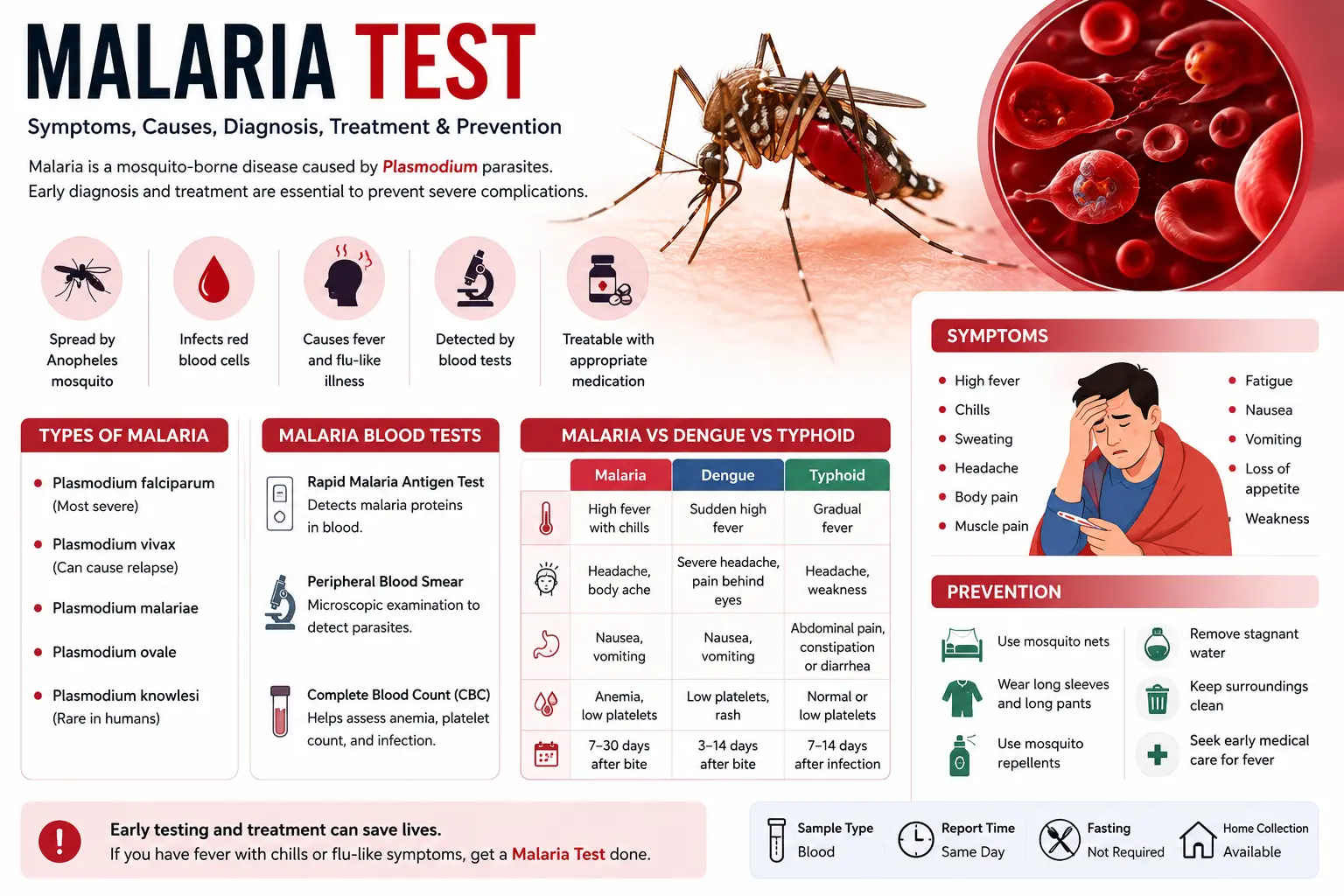
Malaria is a serious mosquito-borne infectious disease caused by Plasmodium parasites. Humans become infected when bitten by an infected female Anopheles mosquito carrying the parasite.
Once inside the body, the parasite first infects the liver and then enters the bloodstream, where it destroys red blood cells. This leads to symptoms such as fever, chills, sweating, headache, fatigue, and body aches.
Malaria remains one of the most common infectious diseases in tropical and subtropical countries, including India. During the monsoon season, the number of malaria cases usually increases because stagnant water provides ideal breeding grounds for mosquitoes.
Early diagnosis using a Malaria Blood Test is extremely important because prompt treatment prevents severe complications such as cerebral malaria, anemia, kidney failure, breathing problems, and multi-organ damage.
If you experience recurrent fever with chills—especially during or after the rainy season—you should consult a healthcare professional and undergo malaria testing as soon as possible.
How Does Malaria Spread?
Malaria spreads primarily through the bite of an infected female Anopheles mosquito.
When the mosquito bites a person, Plasmodium parasites enter the bloodstream and travel to the liver, where they multiply before infecting red blood cells.
Malaria does not usually spread through casual contact such as shaking hands, sharing food, coughing, or sneezing.
In rare situations, malaria may also spread through infected blood transfusions, organ transplantation, contaminated needles, or from a pregnant mother to her baby.
Mosquitoes breed in stagnant water found around homes, construction sites, open containers, coolers, and drains. Eliminating mosquito breeding sites is one of the most effective ways to reduce malaria transmission.
Using mosquito nets, insect repellents, wearing full-sleeved clothing, and keeping surroundings clean are simple but highly effective preventive measures.
Types of Malaria
Malaria is caused by different species of the Plasmodium parasite. Although all types affect the red blood cells, some are more severe than others.
The five species known to infect humans include:
- Plasmodium falciparum – The most dangerous form of malaria. It can rapidly cause severe illness, cerebral malaria, organ failure, and even death if not treated promptly.
- Plasmodium vivax – The most common cause of malaria in India. It generally causes less severe disease than P. falciparum but has the ability to remain dormant in the liver, leading to relapses months after the initial infection.
- Plasmodium malariae – A less common species that may cause prolonged, mild infections lasting for several years if left untreated.
- Plasmodium ovale – Found mainly in parts of Africa and capable of causing relapsing malaria due to dormant liver stages.
- Plasmodium knowlesi – Primarily infects monkeys but can occasionally infect humans in certain parts of Southeast Asia. It can progress rapidly and requires prompt diagnosis.
Identifying the specific Plasmodium species helps doctors select the most effective treatment and determine the likelihood of recurrence or complications.
Modern diagnostic laboratories use Rapid Malaria Antigen Tests along with Peripheral Blood Smear Examination to accurately identify malaria parasites.
Symptoms of Malaria
Malaria symptoms usually develop between 7 and 30 days after being bitten by an infected mosquito, although the incubation period may vary depending on the parasite species.
The classic symptom of malaria is a recurring cycle of chills, high fever, and heavy sweating. However, symptoms can differ from person to person.
Common symptoms include:
- High fever that may come and go
- Severe chills and shivering
- Excessive sweating
- Headache
- Muscle pain
- Joint pain
- Weakness and fatigue
- Nausea and vomiting
- Loss of appetite
- Abdominal pain
- Diarrhea in some patients
- Rapid heartbeat
- Pale skin due to anemia
Severe malaria may present with:
- Difficulty breathing
- Confusion
- Seizures
- Unconsciousness
- Jaundice
- Kidney failure
- Severe anemia
- Low blood pressure
- Bleeding disorders
Children, elderly individuals, pregnant women, and people with weakened immune systems are at greater risk of developing severe malaria.
Anyone experiencing high fever with chills, particularly during the rainy season or after traveling to a malaria-prone area, should seek immediate medical attention and undergo malaria testing.
When Should You Get a Malaria Test?
Early diagnosis is one of the most important factors in preventing serious complications from malaria.
Doctors recommend a Malaria Blood Test if you experience:
- Fever with chills
- Fever occurring every 48–72 hours
- Persistent headache with body pain
- Fever after mosquito exposure
- Fever after visiting a malaria-endemic region
- Unexplained fatigue
- Vomiting with fever
- Sudden weakness
- Low platelet count detected on a CBC
- Symptoms that resemble dengue or typhoid
Malaria shares many symptoms with dengue, typhoid, viral fever, influenza, and COVID-19. Because these illnesses require different treatments, laboratory confirmation is essential.
Doctors often recommend a combination of investigations such as:
- Malaria Parasite Test
- Rapid Malaria Antigen Test
- Complete Blood Count (CBC)
- Dengue NS1 Antigen Test
- Typhoid Test
Prompt testing allows treatment to begin before the infection progresses to severe malaria or causes complications affecting the brain, kidneys, liver, or lungs.
Malaria Blood Tests
Several laboratory tests are available to diagnose malaria accurately.
The most commonly used tests include:
• Rapid Malaria Antigen Test (RMAT) This test detects malaria-specific proteins in the blood and produces results within a short time. It is widely used for rapid diagnosis.
• Peripheral Blood Smear Examination A laboratory specialist examines blood under a microscope to identify malaria parasites and determine the Plasmodium species responsible for infection. It remains the gold standard for malaria diagnosis.
• Complete Blood Count (CBC) Although CBC cannot diagnose malaria directly, it often reveals low platelet count, anemia, and reduced white blood cell counts that support the diagnosis.
• Polymerase Chain Reaction (PCR) PCR testing is highly sensitive and can detect very small amounts of parasite DNA. It is generally reserved for specialized laboratories.
• Quantitative Buffy Coat (QBC) Test Some laboratories use QBC technology for faster microscopic detection of malaria parasites.
Doctors may recommend repeating the malaria test if symptoms strongly suggest malaria but the initial report is negative, since parasite levels may be too low to detect during the early stage of infection.
Early laboratory confirmation enables faster treatment and greatly improves recovery outcomes.
Difference Between Malaria, Dengue & Typhoid
Malaria, dengue, and typhoid are among the most common causes of fever in India, particularly during the monsoon season. Since their early symptoms are often similar, it is difficult to distinguish between them without laboratory testing.
Although all three illnesses may cause fever, body aches, weakness, and headache, they are caused by completely different organisms and require different treatments.
Malaria is caused by Plasmodium parasites and spreads through the bite of infected female Anopheles mosquitoes.
Dengue is caused by the Dengue virus and spreads through Aedes mosquitoes that usually bite during the daytime.
Typhoid is caused by the bacterium Salmonella Typhi and spreads through contaminated food and drinking water.
Some key differences include:
- Malaria commonly causes recurring fever with chills, shivering, and heavy sweating.
- Dengue often presents with sudden high fever, severe headache, pain behind the eyes, muscle pain, skin rash, and a significant drop in platelet count.
- Typhoid usually causes gradually increasing fever, abdominal pain, constipation or diarrhea, weakness, and loss of appetite.
Doctors often recommend a combination of investigations such as CBC, Malaria Parasite Test, Dengue NS1 Antigen Test, Dengue IgM/IgG Antibody Test, and Typhoid Test (Widal or TyphiDot) to identify the exact cause of fever.
Accurate diagnosis ensures appropriate treatment and prevents unnecessary medications or delayed care.
Treatment for Malaria
Malaria is a treatable disease when diagnosed early.
Treatment depends on several factors, including the Plasmodium species, severity of infection, patient age, pregnancy status, and local treatment guidelines.
Doctors usually prescribe antimalarial medications that effectively eliminate the parasite from the bloodstream. In some cases, additional medicines may be required to prevent relapse, especially for Plasmodium vivax infections.
Supportive treatment may include:
- Adequate hydration
- Medicines to reduce fever
- Rest
- Nutritional support
- Monitoring blood counts
- Hospitalization for severe malaria
Patients with severe malaria may require intravenous medications, oxygen therapy, blood transfusion, kidney support, or intensive care monitoring.
It is extremely important to complete the full course of prescribed medication even if symptoms improve within a few days.
Self-medication should be avoided because incorrect treatment may lead to drug resistance, treatment failure, or serious complications.
Anyone experiencing worsening symptoms such as confusion, breathing difficulty, seizures, persistent vomiting, or reduced urine output should seek emergency medical attention immediately.
How Can Malaria Be Prevented?
Preventing mosquito bites remains the most effective way to reduce the risk of malaria.
Simple preventive measures include:
- Sleep under mosquito nets, especially during the rainy season.
- Apply mosquito repellents to exposed skin.
- Wear full-sleeved clothing and long trousers in the evening and at night.
- Install mosquito screens on doors and windows.
- Remove stagnant water from coolers, flower pots, buckets, old tyres, and water tanks.
- Keep water storage containers properly covered.
- Maintain clean surroundings to prevent mosquito breeding.
- Use mosquito coils, vaporizers, or insecticide sprays where appropriate.
- Seek early medical evaluation for any unexplained fever.
Travellers visiting malaria-endemic regions may also require preventive antimalarial medicines based on medical advice.
Community awareness, mosquito control measures, and prompt diagnosis remain essential for reducing malaria transmission and protecting public health.
Malaria Testing in Panchkula
Shyam Pathology Lab offers accurate and reliable Malaria Blood Testing in Panchkula with fast reporting and convenient home sample collection.
Our experienced laboratory team performs malaria investigations using modern diagnostic methods to ensure dependable results for patients and healthcare professionals.
We provide:
- Rapid Malaria Antigen Test
- Malaria Parasite (MP) Test
- Peripheral Blood Smear Examination
- Complete Blood Count (CBC)
- Platelet Count
- Dengue & Typhoid Fever Panels
- Home Blood Sample Collection
- Same-Day Reports for most routine investigations
Patients from Panchkula, Chandigarh, Mohali, Zirakpur, Pinjore, Kalka, Karimpur, and nearby areas can conveniently book malaria testing from home.
During the monsoon season, timely diagnosis becomes especially important because malaria cases often increase. Early testing allows prompt treatment and significantly reduces the risk of severe complications.
If you develop fever with chills, body pain, or excessive sweating, consult a healthcare professional and consider getting a Malaria Blood Test without delay.
Common Questions
Find answers to the most commonly asked questions about this health topic.
A Malaria Test is a blood test used to detect Plasmodium parasites or malaria antigens in the bloodstream for accurate diagnosis.
Book Your Malaria Blood Test Today
Get accurate Malaria Blood Testing with home sample collection, experienced laboratory professionals, and fast reporting from Shyam Pathology Lab.
Kidney Function Test (KFT): Creatinine, Urea, eGFR, Normal Range & Kidney Health Guide
Learn everything about Kidney Function Tests including Creatinine, Blood Urea, eGFR, symptoms, preparation, normal ranges, kidney disease, and KFT testing in Panchkula.
Blood Sugar Test Guide: Normal Range, Fasting, PPBS, RBS & Diabetes Diagnosis
Learn everything about Blood Sugar Tests including Fasting Blood Sugar (FBS), Postprandial Blood Sugar (PPBS), Random Blood Sugar (RBS), normal ranges, diabetes symptoms, preparation, and Blood Sugar Testing in Panchkula.