What Is a Urine Routine Test?
A Urine Routine Test, also called a Routine Urine Examination (R/E) or Urinalysis, is one of the most commonly prescribed laboratory investigations.
It evaluates the physical appearance, chemical composition, and microscopic contents of urine to provide important information about your overall health.
Doctors commonly recommend this test to diagnose urinary tract infections (UTIs), kidney disorders, diabetes, dehydration, and several other medical conditions.
Since many diseases show early changes in urine, routine urine testing plays an important role in preventive healthcare.
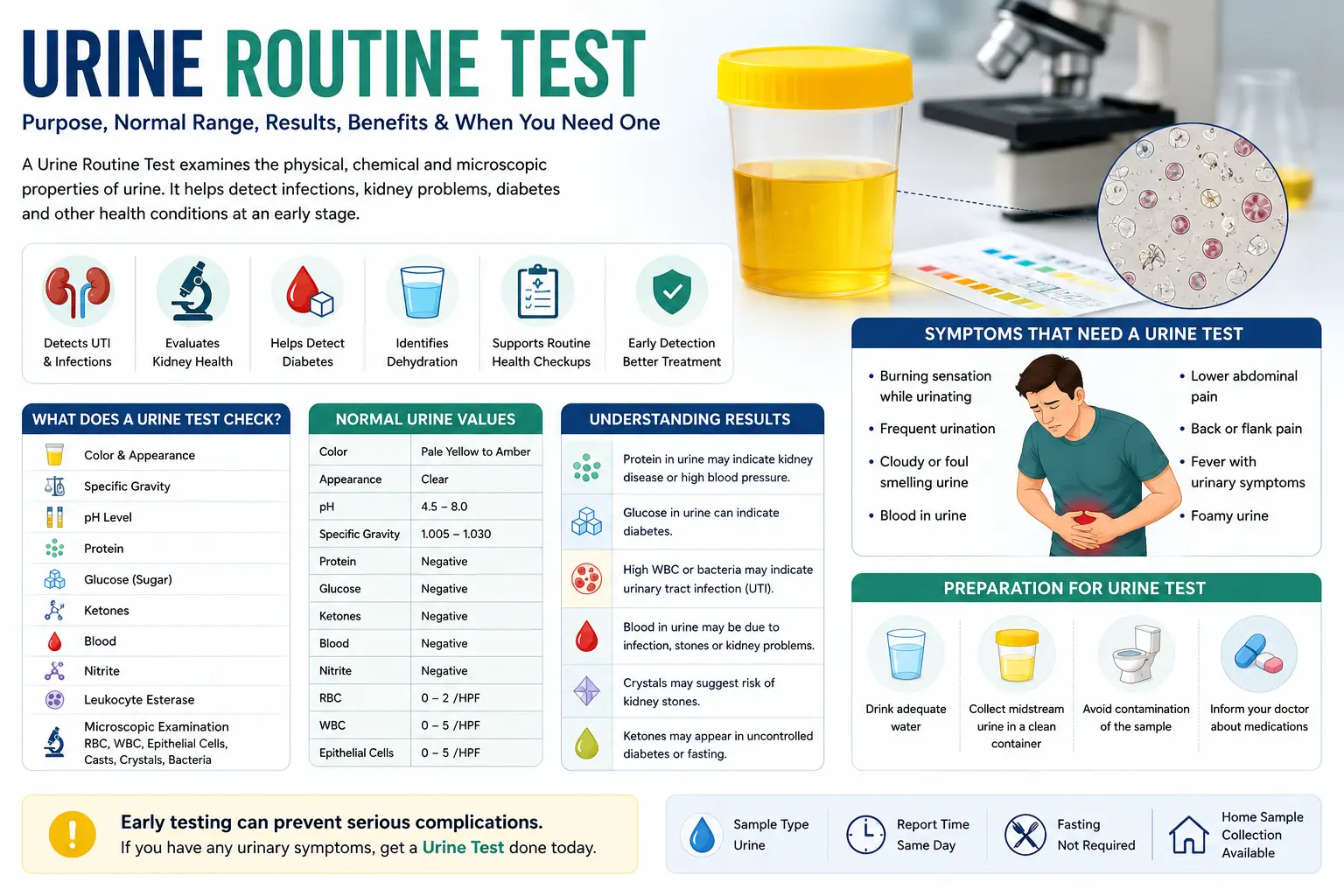
What Does a Urine Test Check?
A Urine Routine Test evaluates multiple parameters to assess your urinary system and general health.
The examination typically includes:
- Color and Appearance
- Specific Gravity
- pH Level
- Protein
- Glucose (Sugar)
- Ketones
- Blood
- Bilirubin
- Nitrite
- Leukocyte Esterase
- Red Blood Cells (RBC)
- White Blood Cells (WBC)
- Epithelial Cells
- Casts
- Crystals
- Bacteria
Together, these findings help doctors identify infections, kidney disease, diabetes, dehydration, and other health conditions.
Who Should Get a Urine Routine Test?
Doctors may recommend a Urine Routine Test for individuals experiencing urinary symptoms or during routine health screening.
The test is commonly advised for:
- People with burning while urinating
- Frequent urination
- Blood in urine
- Lower abdominal pain
- Suspected urinary tract infection (UTI)
- Kidney disease evaluation
- Diabetes monitoring
- Pregnancy checkups
- Annual health checkups
Routine urine testing is often included in preventive health packages because it can detect several conditions before symptoms become severe.
Common Symptoms That Need a Urine Test
A Urine Routine Test may be recommended if you experience:
- Burning sensation while passing urine
- Frequent urge to urinate
- Blood in urine
- Cloudy or foul-smelling urine
- Lower abdominal pain
- Back or flank pain
- Fever with urinary symptoms
- Difficulty passing urine
- Swelling of legs or face
- Foamy urine
These symptoms may indicate urinary tract infections, kidney disorders, or other medical conditions requiring evaluation.
Normal Urine Test Values
Normal urine findings generally include:
- Color: Pale Yellow to Amber
- Appearance: Clear
- pH: 4.5–8.0
- Specific Gravity: 1.005–1.030
- Protein: Negative
- Glucose: Negative
- Ketones: Negative
- Blood: Negative
- Nitrite: Negative
- RBC: 0–2 /HPF
- WBC: 0–5 /HPF
Normal ranges may vary slightly between laboratories. Your doctor will interpret the report along with your symptoms and medical history.
Understanding Urine Test Results
A Urine Routine Test provides valuable information about your health.
Some common findings include:
- Protein in urine may indicate kidney disease.
- Glucose in urine can suggest diabetes.
- Increased WBCs or bacteria often indicate a urinary tract infection.
- Blood in urine may occur due to infection, kidney stones, or other medical conditions.
- Ketones may appear in uncontrolled diabetes or prolonged fasting.
- Crystals may suggest an increased risk of kidney stones.
Abnormal findings should always be interpreted by a qualified healthcare professional.
Benefits of Regular Urine Testing
Routine urine testing offers several important health benefits.
These include:
- Early detection of urinary tract infections
- Identification of kidney disorders
- Screening for diabetes
- Monitoring kidney function
- Detecting dehydration
- Supporting routine health checkups
- Monitoring ongoing medical treatment
Because the test is simple, affordable, and non-invasive, it is one of the most frequently recommended laboratory investigations.
How To Prepare For A Urine Test
A Urine Routine Test usually requires very little preparation.
For the most accurate results:
- Collect a clean midstream urine sample whenever possible.
- Use a sterile urine container.
- Avoid contamination of the sample.
- Inform your doctor about any medications you are taking.
- Drink adequate water unless your doctor advises otherwise.
In most cases, fasting is not required before a routine urine examination.
Urine Testing in Panchkula
Shyam Pathology Lab provides accurate Urine Routine & Microscopy Testing in Panchkula with reliable reporting and convenient home sample collection support.
Patients from Panchkula, Chandigarh, Mohali, Zirakpur, Sector 21 Panchkula, Karimpur, and nearby areas can easily book urine testing.
Our laboratory offers:
- Urine Routine Examination
- Urine Microscopy
- Urine Sugar Test
- Urine Protein Test
- Urine Pregnancy Test
- Urine Culture (when advised)
- Same-Day Reporting for most tests
Early diagnosis helps doctors identify infections, kidney disorders, and metabolic diseases before serious complications develop.
Common Questions
Find answers to the most commonly asked questions about this health topic.
No. Fasting is generally not required before a Urine Routine Test.
Book Your Urine Routine Test Today
Get accurate Urine Routine & Microscopy Testing with reliable reports, convenient sample collection, and trusted diagnostic services from Shyam Pathology Lab.
Blood Sugar Test Guide: Normal Range, Fasting, PPBS, RBS & Diabetes Diagnosis
Learn everything about Blood Sugar Tests including Fasting Blood Sugar (FBS), Postprandial Blood Sugar (PPBS), Random Blood Sugar (RBS), normal ranges, diabetes symptoms, preparation, and Blood Sugar Testing in Panchkula.
Why Is My Hemoglobin Low? Causes, Symptoms, Diagnosis & Treatment Guide
Learn why hemoglobin becomes low, common symptoms of anemia, normal hemoglobin levels, diagnosis, treatment options, and when you should get a CBC blood test.