What Is Hemoglobin?
Hemoglobin is an iron-rich protein found inside red blood cells (RBCs). Its primary function is to carry oxygen from your lungs to every organ, muscle, and tissue in your body while transporting carbon dioxide back to the lungs to be exhaled.
Without adequate hemoglobin, your body's cells cannot receive enough oxygen to produce energy efficiently. As a result, people with low hemoglobin often experience fatigue, weakness, dizziness, and reduced physical performance.
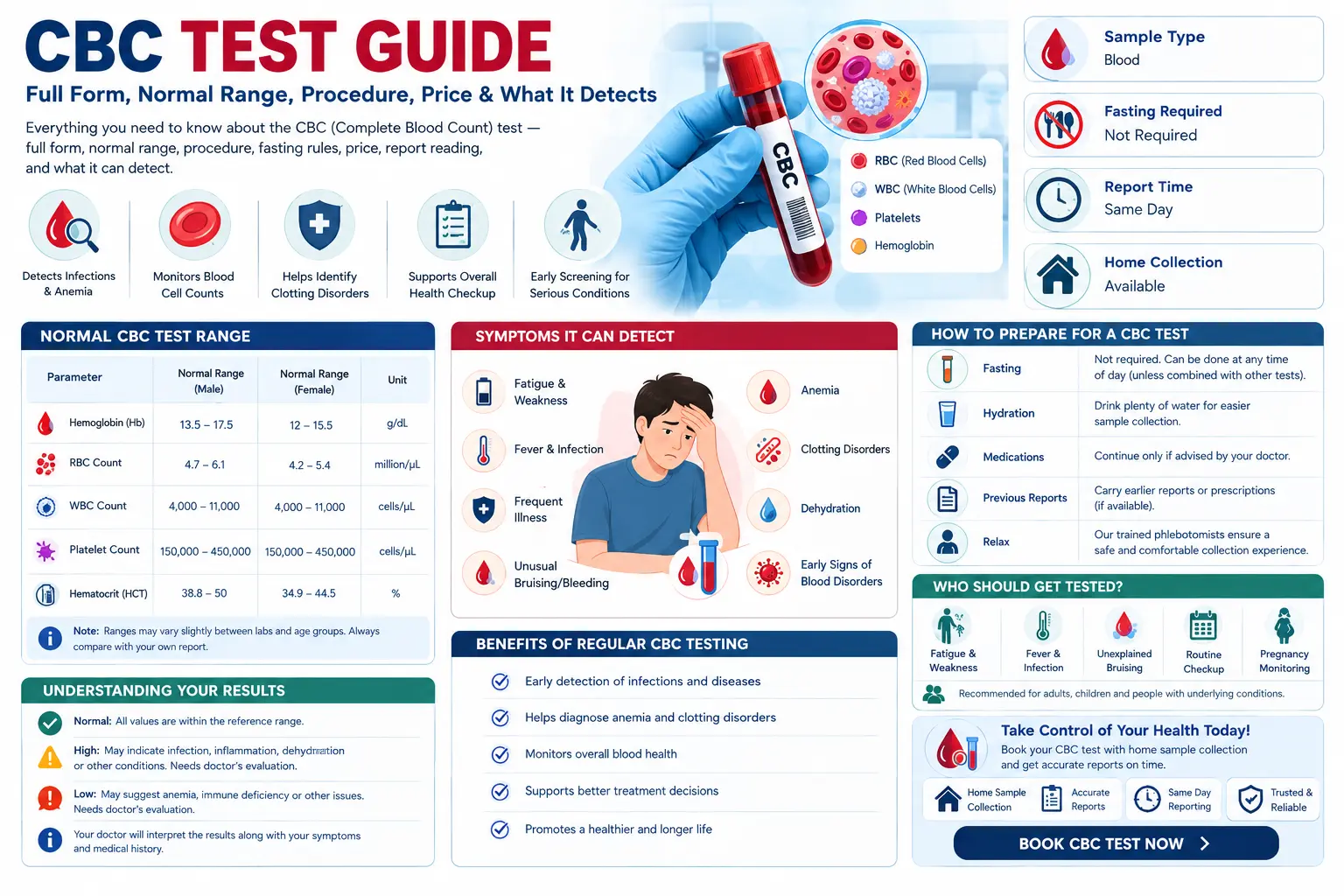
Doctors usually measure hemoglobin as part of a Complete Blood Count (CBC), one of the most commonly prescribed blood tests. The result helps evaluate your overall health and detect anemia, nutritional deficiencies, blood disorders, chronic diseases, and many other medical conditions.
Maintaining healthy hemoglobin levels is essential because oxygen is required for nearly every function in the human body. Even a mild decrease may affect daily activities, while severe anemia can become life-threatening if left untreated.
What Is Considered Low Hemoglobin?
Normal hemoglobin levels vary depending on age, sex, pregnancy, and overall health. Healthcare providers compare your results with standard reference ranges before determining whether your hemoglobin level is low.
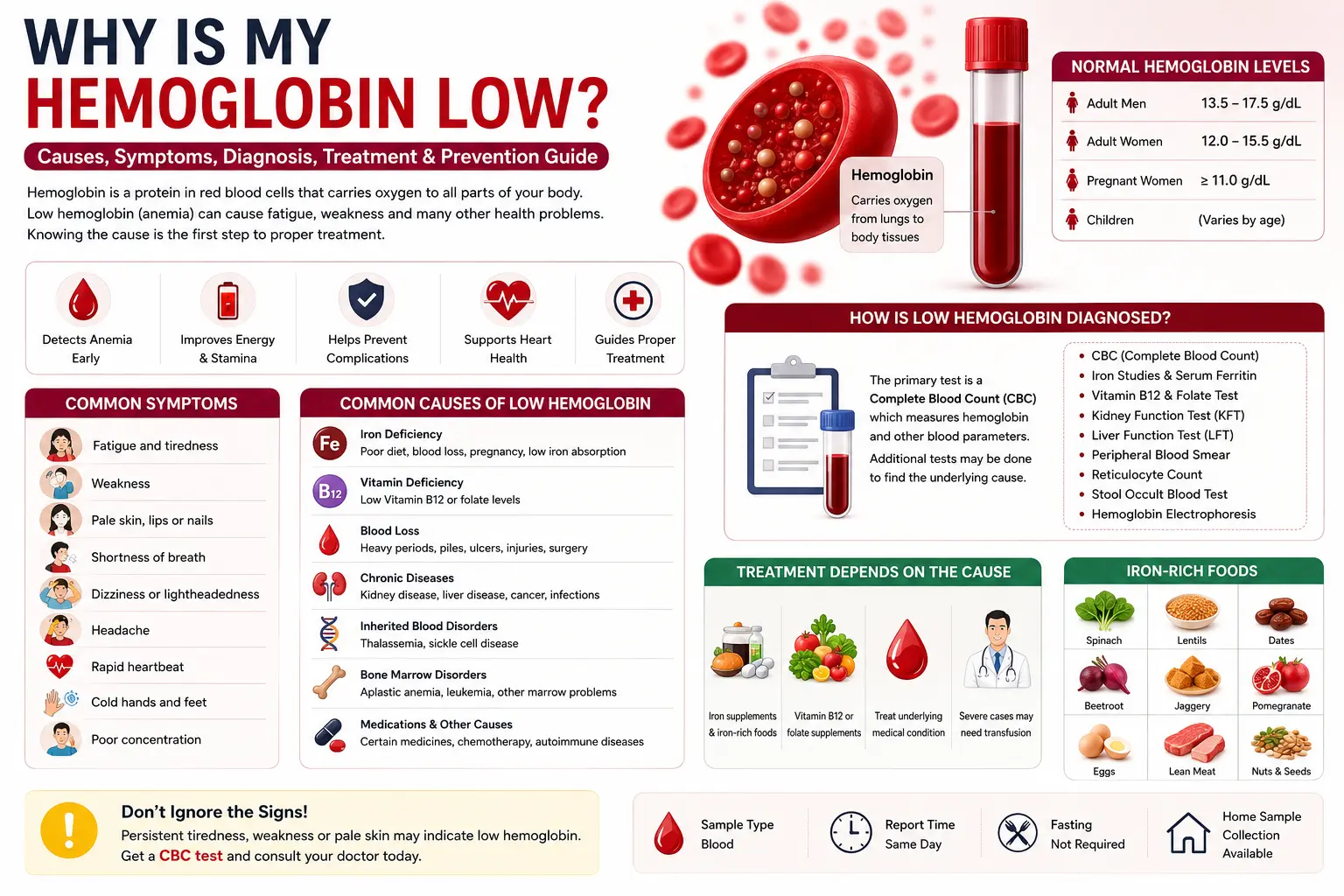
Generally, hemoglobin below 13.5 g/dL in adult men and below 12 g/dL in adult women is considered low. During pregnancy, slightly lower values may be expected because of normal physiological changes, although levels below 11 g/dL usually require medical evaluation.
Children have different normal ranges depending on their age, so pediatric results should always be interpreted using age-specific reference values.
A mildly reduced hemoglobin level may not produce noticeable symptoms, but moderate or severe anemia can significantly reduce oxygen delivery throughout the body. This often leads to tiredness, pale skin, breathlessness, dizziness, headaches, and reduced exercise tolerance.
Because low hemoglobin is a sign rather than a disease, doctors recommend identifying its underlying cause instead of treating the number alone.
Common Causes of Low Hemoglobin
Low hemoglobin is not a disease itself—it is usually a sign of an underlying health condition. Identifying the cause is essential because treatment depends on why your hemoglobin level has decreased.
The most common cause is iron deficiency. Iron is required by the body to produce hemoglobin. A diet low in iron, poor absorption of iron from food, or increased iron requirements during pregnancy can all lead to iron deficiency anemia.
Vitamin deficiencies are another frequent cause. Low levels of Vitamin B12 or folate reduce the body's ability to produce healthy red blood cells, resulting in decreased hemoglobin levels.
Blood loss is also a major contributor. Heavy menstrual bleeding, stomach ulcers, piles (hemorrhoids), injuries, surgeries, or internal bleeding can gradually lower hemoglobin without obvious symptoms.
Chronic medical conditions such as kidney disease, liver disease, cancer, rheumatoid arthritis, and chronic infections may reduce red blood cell production over time, leading to anemia.
Certain inherited blood disorders including thalassemia and sickle cell disease affect the structure or production of hemoglobin and often require lifelong medical management.
Bone marrow disorders, where the body cannot produce enough healthy blood cells, may also cause low hemoglobin, although these conditions are less common.
Some medications, chemotherapy treatments, and autoimmune diseases can also interfere with red blood cell production or increase their destruction.
Because there are many possible causes, doctors usually recommend additional investigations such as a Complete Blood Count (CBC), Iron Studies, Serum Ferritin, Vitamin B12 Test, Folate Test, Kidney Function Test (KFT), Liver Function Test (LFT), or other specialized investigations to determine the exact reason for low hemoglobin.
Symptoms of Low Hemoglobin
The symptoms of low hemoglobin often develop gradually, especially when anemia progresses slowly. In mild cases, many people may not notice any symptoms at all. As hemoglobin levels continue to decrease, the body's organs and tissues receive less oxygen, leading to noticeable health problems.
One of the earliest and most common symptoms is persistent fatigue. People with low hemoglobin often feel tired even after getting adequate rest because their muscles and organs are not receiving enough oxygen to function efficiently.
Weakness and reduced physical stamina are also common. Simple activities such as climbing stairs, walking long distances, or carrying groceries may become exhausting.
Many individuals experience shortness of breath, particularly during exercise or physical activity. In more severe cases, breathing difficulty may occur even while resting.
Pale skin, pale lips, or pale nail beds are classic signs of anemia. Reduced hemoglobin gives the skin less of its normal pink or red appearance.
Other common symptoms include dizziness, lightheadedness, headaches, cold hands and feet, rapid heartbeat (palpitations), difficulty concentrating, and reduced work performance.
Iron deficiency anemia may also cause brittle nails, hair loss, sore tongue, cracks at the corners of the mouth, and unusual cravings for ice or clay (pica).
If these symptoms persist, a Complete Blood Count (CBC) should be performed to evaluate your hemoglobin level and determine whether additional testing is required.
How Is Low Hemoglobin Diagnosed?
Diagnosing low hemoglobin begins with understanding your symptoms, medical history, dietary habits, medications, and any recent illnesses or blood loss. A healthcare professional may also perform a physical examination to look for signs such as pale skin, rapid heartbeat, or other indicators of anemia.
The primary test used to diagnose low hemoglobin is the Complete Blood Count (CBC). This blood test measures your hemoglobin level along with red blood cell count (RBC), hematocrit (HCT), mean corpuscular volume (MCV), mean corpuscular hemoglobin (MCH), and several other blood parameters. These values help determine whether anemia is present and often provide clues about its underlying cause.
If the CBC confirms low hemoglobin, your doctor may recommend additional investigations including Iron Studies, Serum Ferritin, Vitamin B12 Test, Folate Test, Kidney Function Test (KFT), Liver Function Test (LFT), Peripheral Blood Smear, Reticulocyte Count, Stool Occult Blood Test, or Hemoglobin Electrophoresis depending on the suspected cause.
Doctors interpret your hemoglobin level together with other laboratory findings instead of relying on a single number. This comprehensive evaluation helps identify the exact cause and guides appropriate treatment.
Treatment for Low Hemoglobin
Treatment for low hemoglobin depends entirely on its underlying cause. Since low hemoglobin is a sign rather than a disease itself, identifying the reason behind it is the first and most important step.
If iron deficiency is responsible, doctors usually recommend iron-rich foods along with oral iron supplements. Foods such as spinach, lentils, beans, jaggery, dates, red meat, fish, eggs, and iron-fortified cereals can help improve iron intake. Vitamin C-rich foods like oranges, lemons, guava, and amla also improve iron absorption.
When Vitamin B12 or folate deficiency is diagnosed, supplementation and dietary changes are recommended. Foods including milk, eggs, fish, meat, leafy green vegetables, and fortified cereals help restore healthy red blood cell production.
If chronic diseases such as kidney disease, liver disease, inflammatory disorders, or cancer are causing anemia, treatment focuses on managing the underlying condition while monitoring hemoglobin levels regularly.
Patients experiencing significant blood loss due to heavy menstrual bleeding, stomach ulcers, surgery, or internal bleeding may require treatment to stop the bleeding before hemoglobin levels can recover.
In severe anemia, hospitalization, intravenous iron therapy, erythropoietin injections, or blood transfusions may be necessary depending on the patient's condition and the cause of anemia.
Self-medicating with iron supplements without proper diagnosis is not recommended. Excess iron can accumulate in the body and may become harmful. Always consult a qualified healthcare professional before starting treatment.
Foods That Increase Hemoglobin
Although diet alone cannot treat every type of anemia, consuming nutrient-rich foods plays an important role in maintaining healthy hemoglobin levels and supporting red blood cell production.
Iron-rich foods include spinach, fenugreek leaves, beetroot, lentils, chickpeas, kidney beans, soybeans, pumpkin seeds, sesame seeds, jaggery, raisins, dates, lean red meat, chicken liver, seafood, and eggs.
Vitamin B12 is found mainly in animal-based foods such as milk, yogurt, cheese, eggs, fish, chicken, and meat. Individuals following a vegetarian or vegan diet may require fortified foods or supplements if recommended by their doctor.
Folate-rich foods include green leafy vegetables, broccoli, asparagus, avocados, citrus fruits, peas, beans, and whole grains.
Vitamin C improves iron absorption, so combining iron-rich foods with oranges, lemons, amla, kiwi, strawberries, tomatoes, or bell peppers can increase the body's ability to absorb dietary iron.
At the same time, it is advisable to avoid drinking tea or coffee immediately before or after iron-rich meals because they can reduce iron absorption.
A balanced diet combined with appropriate medical treatment offers the best chance of restoring normal hemoglobin levels and preventing future anemia.
When Should You See a Doctor?
Occasional tiredness does not always indicate anemia, but persistent symptoms should never be ignored. If fatigue, weakness, dizziness, pale skin, or shortness of breath continue for several weeks, medical evaluation is recommended.
You should seek medical attention immediately if you experience chest pain, severe breathlessness, fainting, rapid heartbeat, blood in stool or urine, black-colored stools, heavy unexplained bleeding, or sudden worsening of symptoms.
Pregnant women, older adults, children, and individuals with chronic illnesses should not ignore even mild symptoms because anemia can affect growth, pregnancy outcomes, heart health, and overall quality of life.
People with a family history of blood disorders such as thalassemia or sickle cell disease should also undergo appropriate screening if advised by their healthcare provider.
Early diagnosis through a Complete Blood Count (CBC) and related laboratory investigations allows doctors to identify the cause quickly and begin effective treatment before complications develop.
Hemoglobin Testing in Panchkula
Shyam Pathology Lab offers accurate hemoglobin testing and Complete Blood Count (CBC) investigations in Panchkula with affordable pricing, experienced laboratory professionals, and convenient home sample collection services.
Our CBC test measures hemoglobin along with several important blood parameters including red blood cell count, white blood cell count, platelet count, hematocrit, MCV, MCH, and MCHC, providing a comprehensive overview of your blood health.
Patients from Panchkula, Chandigarh, Mohali, Zirakpur, Pinjore, Kalka, and nearby areas can easily book their blood tests online or schedule doorstep sample collection.
If your CBC indicates low hemoglobin, additional investigations such as Iron Studies, Serum Ferritin, Vitamin B12 Test, Folate Test, Kidney Function Test (KFT), and Liver Function Test (LFT) may be recommended to determine the underlying cause.
Early diagnosis helps prevent complications and allows timely treatment for anemia and other blood disorders.
Common Questions
Find answers to the most commonly asked questions about this health topic.
Generally, hemoglobin below 13.5 g/dL in adult men and below 12 g/dL in adult women is considered low. Normal ranges may vary slightly between laboratories.
Book Your CBC Test to Check Hemoglobin Levels
Get accurate hemoglobin testing with a Complete Blood Count (CBC), fast reports, affordable pricing, and convenient home sample collection from Shyam Pathology Lab.
Urine Routine Test Guide: Normal Range, UTI, Kidney Health, Results & When You Need One
Learn everything about Urine Routine & Microscopy Tests including normal values, UTI symptoms, kidney disease, diabetes screening, urine test preparation, and urine testing in Panchkula.
What Causes High Cholesterol? Symptoms, Risk Factors, Prevention & Lipid Profile Guide
Learn what causes high cholesterol, its symptoms, risk factors, treatment options, normal cholesterol levels, and when you should get a Lipid Profile Test.