What Is High Cholesterol?
High cholesterol is a condition in which there is an excessive amount of cholesterol circulating in your blood. Cholesterol is a waxy, fat-like substance that your body needs to build healthy cells, produce hormones, and make vitamin D. However, when cholesterol levels become too high, they can accumulate inside the walls of your arteries.
Over time, these deposits narrow the arteries and reduce blood flow to vital organs such as the heart and brain. This significantly increases the risk of heart attack, stroke, and other cardiovascular diseases.
One of the biggest concerns is that high cholesterol usually develops silently. Most people experience no symptoms until serious complications occur, making regular screening through a Lipid Profile Test extremely important.
What Causes High Cholesterol?
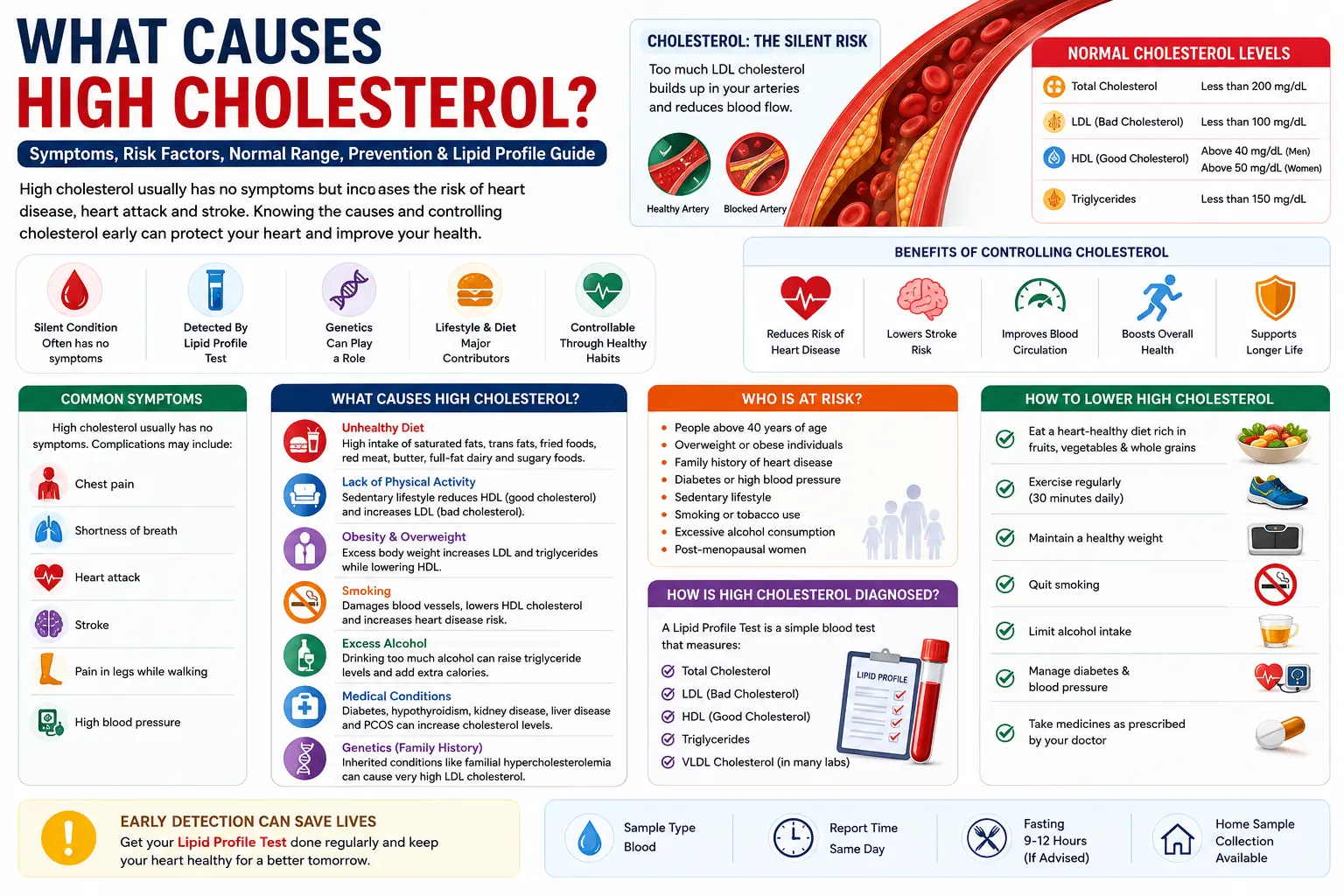
Several factors can contribute to high cholesterol levels. Poor dietary habits are among the leading causes. Foods rich in saturated fats, trans fats, processed meats, fried foods, bakery products, and sugary snacks can increase LDL ("bad") cholesterol while lowering HDL ("good") cholesterol.
A sedentary lifestyle also plays a major role. Lack of physical activity reduces the body's ability to remove excess cholesterol from the bloodstream. Obesity further increases LDL cholesterol and triglyceride levels while lowering protective HDL cholesterol.
Medical conditions such as diabetes, hypothyroidism, kidney disease, liver disorders, and polycystic ovary syndrome (PCOS) may also contribute to abnormal cholesterol levels. Smoking damages blood vessels and lowers HDL cholesterol, while excessive alcohol consumption can increase triglycerides.
In some individuals, genetics are responsible. Familial Hypercholesterolemia is an inherited condition that causes very high LDL cholesterol even in young adults.
Who Is At Risk of High Cholesterol?
Anyone can develop high cholesterol, but certain individuals have a greater risk.
People over the age of 40, individuals who are overweight or obese, smokers, people with diabetes, high blood pressure, hypothyroidism, chronic kidney disease, or a family history of heart disease should undergo regular cholesterol screening.
Individuals who consume a diet high in processed foods, fast food, butter, ghee, red meat, sugary drinks, and refined carbohydrates are also more likely to develop elevated cholesterol levels.
Even healthy-looking individuals can have high cholesterol because it often has no visible symptoms.
Symptoms of High Cholesterol
High cholesterol itself rarely produces symptoms. This is why it is often referred to as a "silent condition."
Many people only discover they have high cholesterol after undergoing routine blood testing or after experiencing complications such as chest pain, heart attack, or stroke.
Some warning signs associated with advanced cardiovascular disease include chest discomfort, shortness of breath, pain while walking, numbness in limbs, dizziness, and fatigue. However, these symptoms are caused by reduced blood flow rather than cholesterol itself.
Regular Lipid Profile testing is the only reliable way to detect high cholesterol before complications develop.
Normal Cholesterol Levels
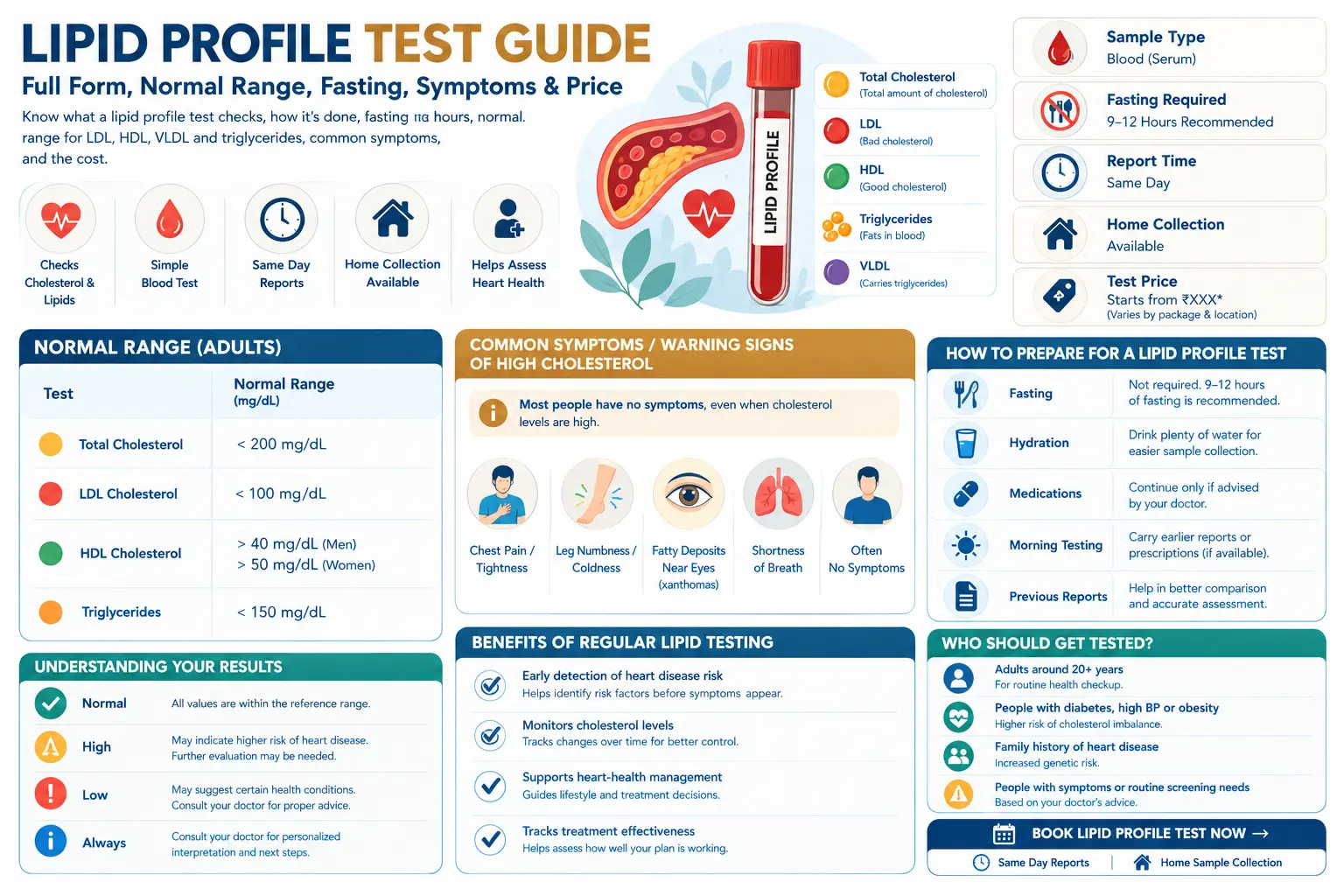
Doctors evaluate cholesterol using a Lipid Profile Test, which measures Total Cholesterol, LDL Cholesterol, HDL Cholesterol, and Triglycerides.
General target values include:
- Total Cholesterol: Less than 200 mg/dL
- LDL Cholesterol: Less than 100 mg/dL
- HDL Cholesterol: Above 40 mg/dL in men and above 50 mg/dL in women
- Triglycerides: Less than 150 mg/dL
Individuals with diabetes, hypertension, previous heart attack, or kidney disease may require even lower LDL cholesterol targets as recommended by their physician.
How Is High Cholesterol Diagnosed?
High cholesterol is diagnosed through a simple blood test called a Lipid Profile or Lipid Panel. This test measures the different types of cholesterol and fats circulating in your blood.
A standard Lipid Profile includes:
- Total Cholesterol
- LDL (Low-Density Lipoprotein) Cholesterol
- HDL (High-Density Lipoprotein) Cholesterol
- Triglycerides
- VLDL Cholesterol (in many laboratories)
Some healthcare providers may recommend fasting for 9–12 hours before the test, especially when triglyceride levels need to be measured accurately. However, non-fasting lipid profiles are also commonly used depending on your medical condition.
Doctors interpret the results along with your age, weight, blood pressure, diabetes status, smoking history, family history of heart disease, and overall cardiovascular risk. Based on these findings, they may recommend lifestyle modifications, repeat testing, or medication if necessary.
Regular cholesterol screening is recommended for adults over 20 years of age, particularly those with diabetes, obesity, hypertension, or a family history of cardiovascular disease.
How To Reduce High Cholesterol Naturally
Managing cholesterol often begins with healthy lifestyle changes. Even small improvements in daily habits can significantly lower LDL cholesterol and improve heart health.
Some of the most effective ways to reduce cholesterol include:
- Eat more fruits and vegetables every day.
- Increase your intake of oats, whole grains, beans, and fiber-rich foods.
- Replace butter and ghee with healthier oils in moderation.
- Choose lean proteins such as fish, chicken, pulses, and legumes.
- Reduce fried foods, bakery products, processed snacks, and sugary beverages.
- Exercise for at least 30 minutes on most days of the week.
- Maintain a healthy body weight.
- Quit smoking.
- Limit alcohol consumption.
- Control diabetes and high blood pressure.
For individuals with significantly elevated cholesterol or existing heart disease, lifestyle changes alone may not be enough. Doctors may prescribe cholesterol-lowering medications such as statins along with regular follow-up testing.
The key is consistency. Healthy eating and regular physical activity provide long-term protection against heart attacks and strokes.
Foods That Increase and Lower Cholesterol
Diet plays one of the biggest roles in cholesterol management.
Foods that may increase LDL cholesterol include:
- Fried foods
- Fast food
- Processed meat
- Butter
- Ghee (in excess)
- Cheese
- Cream
- Bakery products
- Cakes and pastries
- Packaged snacks
- Sugary beverages
- Trans-fat-containing foods
Foods that help improve cholesterol levels include:
- Oats
- Whole grains
- Fruits
- Green leafy vegetables
- Nuts
- Seeds
- Beans
- Lentils
- Fatty fish rich in Omega-3
- Olive oil
- Avocados
Replacing unhealthy fats with healthier alternatives while increasing dietary fiber can substantially reduce cardiovascular risk over time.
Cholesterol Testing in Panchkula
Shyam Pathology Lab offers accurate Lipid Profile Testing in Panchkula with affordable pricing, experienced laboratory professionals, and convenient home sample collection services.
Patients from Panchkula, Chandigarh, Mohali, Zirakpur, Pinjore, Kalka, and surrounding areas can easily book cholesterol testing online or by phone.
Our laboratory provides:
- Complete Lipid Profile
- Total Cholesterol
- LDL Cholesterol
- HDL Cholesterol
- Triglycerides
- VLDL Cholesterol
- Preventive Heart Health Packages
- Home Blood Sample Collection
- Same-Day Reports for most routine investigations
Regular cholesterol testing allows early detection of cardiovascular risk factors, enabling timely lifestyle changes and medical treatment before serious complications occur.
Common Questions
Find answers to the most commonly asked questions about this health topic.
High cholesterol can result from unhealthy eating habits, obesity, lack of exercise, smoking, diabetes, hypothyroidism, kidney disease, excessive alcohol consumption, and inherited genetic conditions.
Book Your Lipid Profile Test Today
Monitor your cholesterol levels with an accurate Lipid Profile Test, experienced laboratory professionals, affordable pricing, home sample collection, and reliable reports from Shyam Pathology Lab.